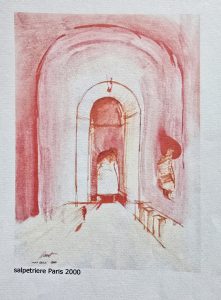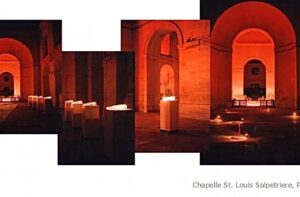
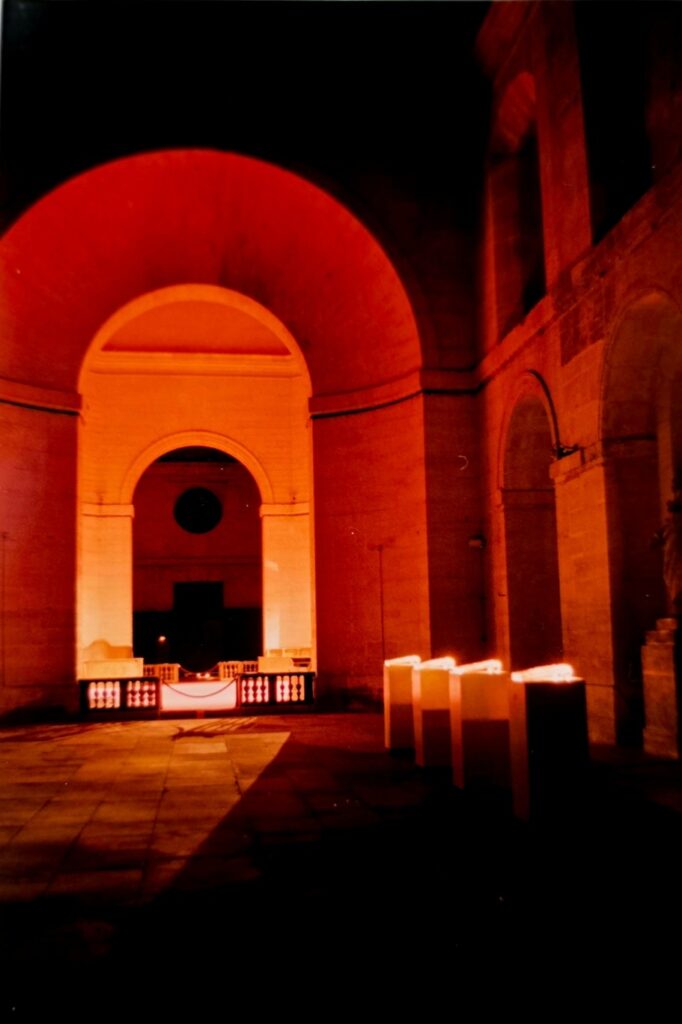
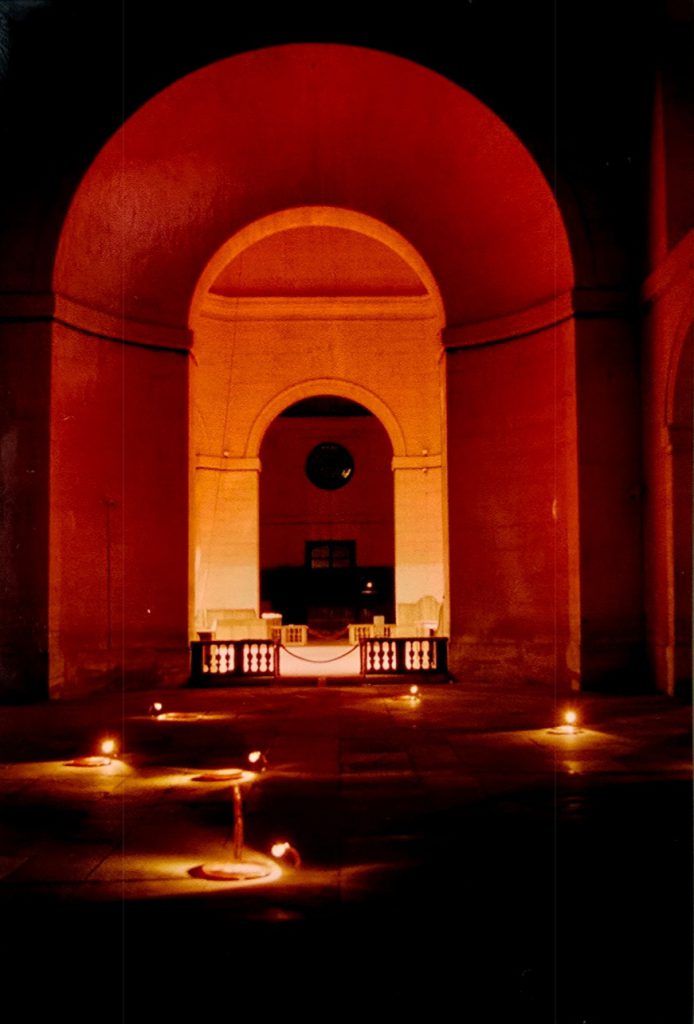
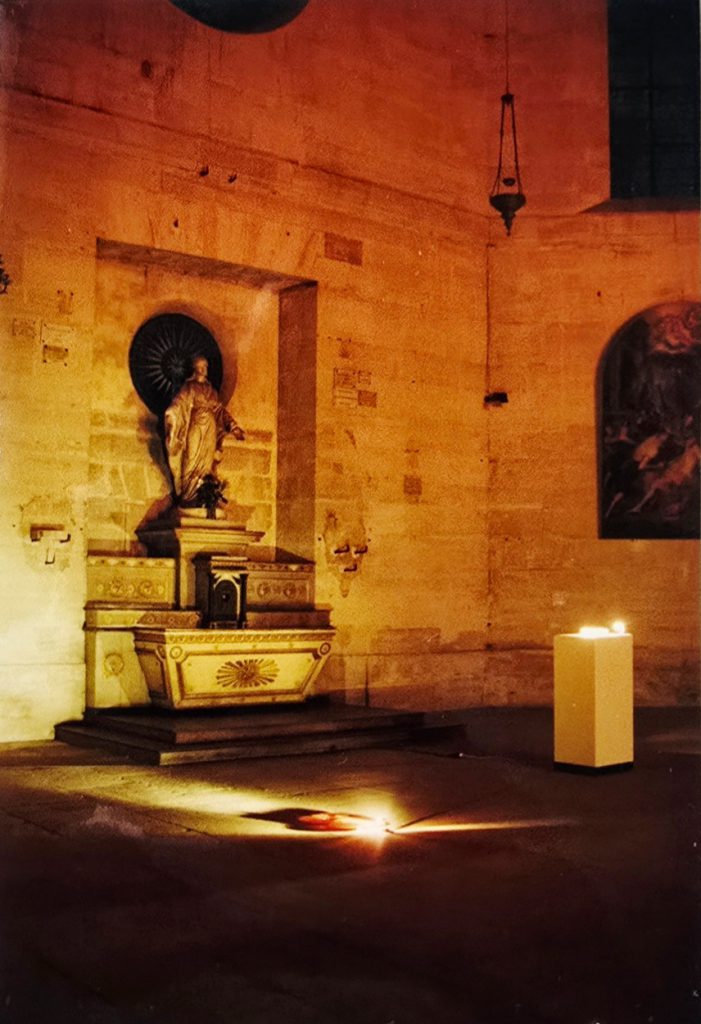
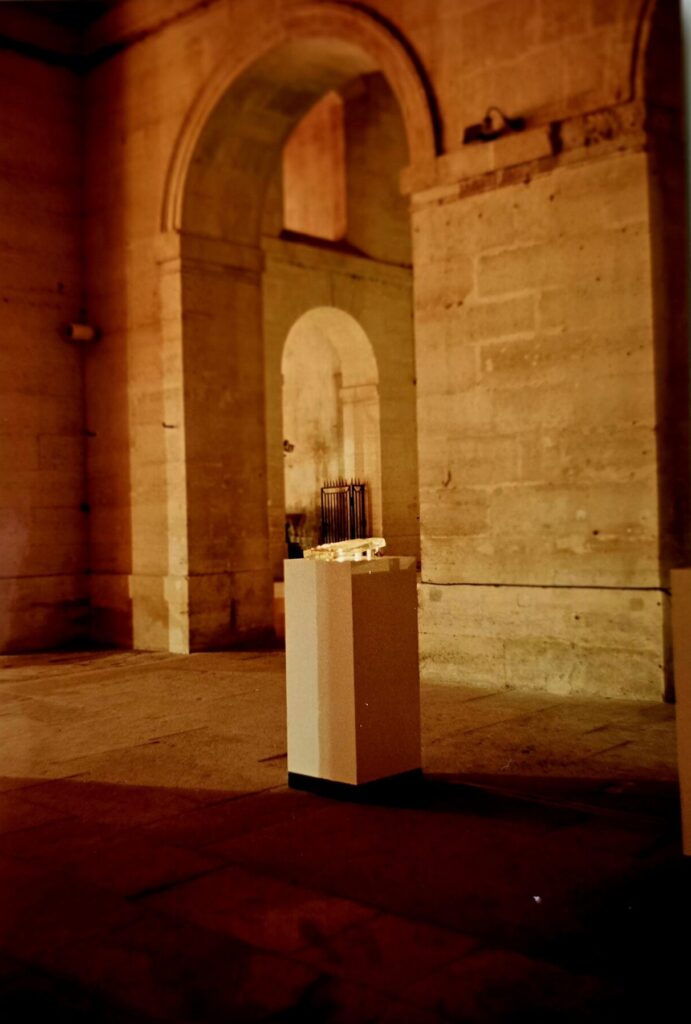

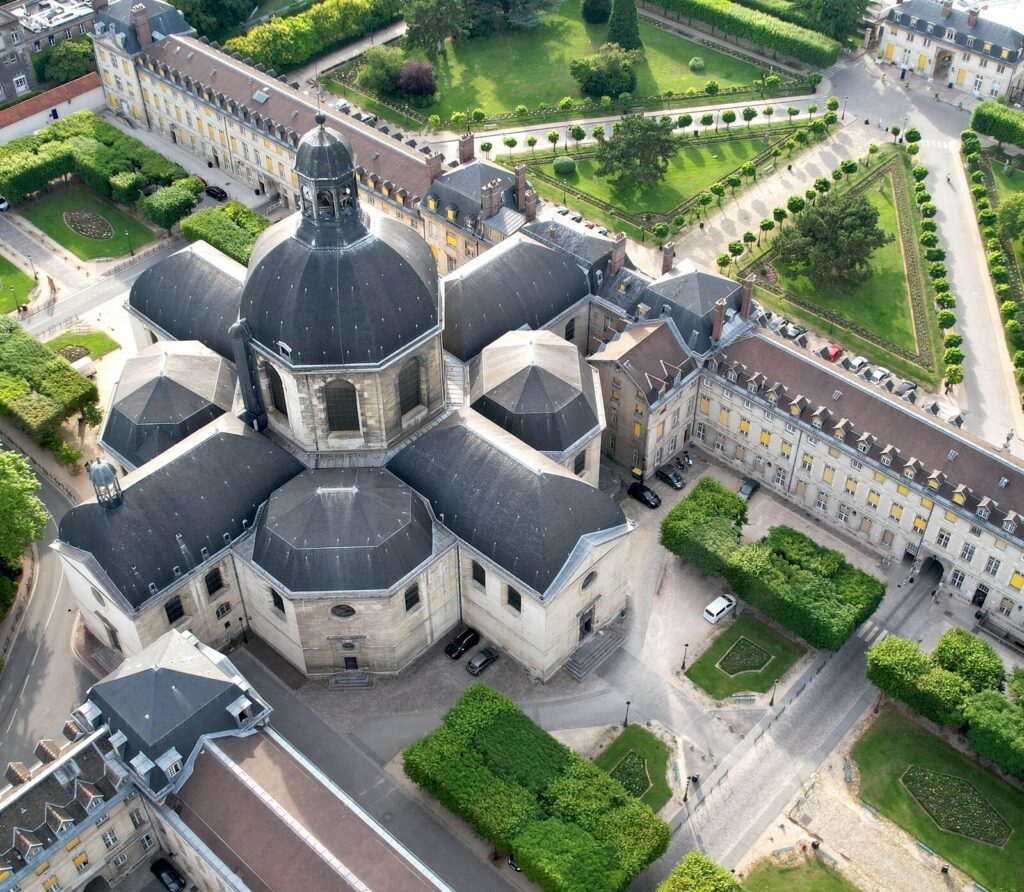
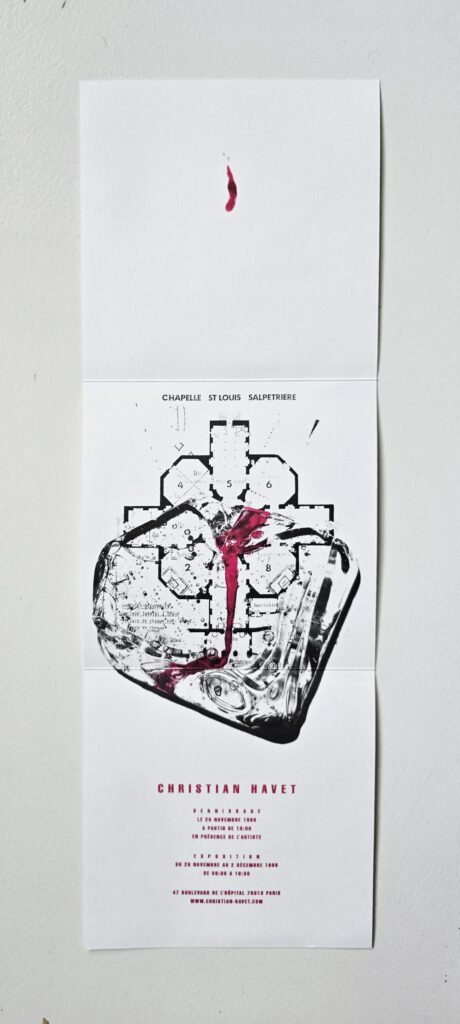
In 2000, the exhibition at the St. Louis Chapel of the Salpétière Hospital, at the center of Europe’s largest hospital complex, was conceived, unlike Christian Boltansky’s « Lessons of Darkness » in 1986, as a « lesson of light. » A plea for health that is in solidarity with the luminous state of our inner « transmitter-receiver. »
I have a predilection for non-museum spaces, steeped in « spiritual » history, which place the viewer in both a state of receptivity and a space for existential questioning. In the naves, glass « splashes » lit from within are placed on the floor or on pedestals. They are « transfigured » by the intensity of the light…In the « choir, » an enormous red carpet, recycled from previous César Awards, is under the intense spotlight… It honors ALL the celebrities who walk it, the vast majority of whom are hospitalized patients.
Echo becomes an acoustic artistic medium in its own right.
The space is considered a total theater, the liturgical conception of the work organizing the visitor’s journey. The sacred space becomes an immersive environment where the works converge to create a comprehensive spiritual and aesthetic experience. « Who are we really? »
In the contemplative context of the hospital chapel, this artistic experience dares to transgress or engage in spiritual dialogue with the profane. This emotionally charged space, a silent witness to joys and sufferings, is an ideal medium for awakening our humanity and our compassion.
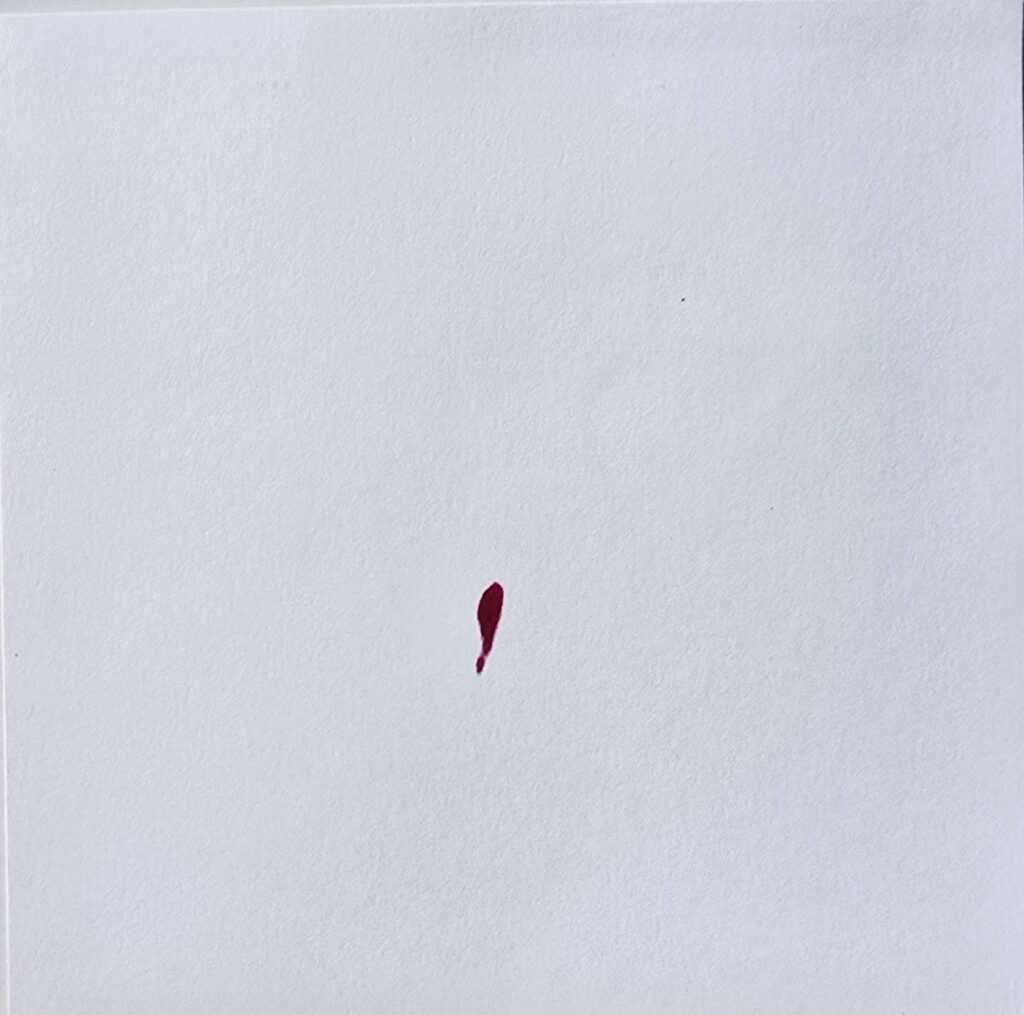
The blood red of the invitation card is much more than a simple aesthetic choice. This visual shock aims to question us. Does the spreading bloodstain speak to us of revelation, of violence, of traces left by our actions? The bloodstain spread across the architectural plan of the space becomes a metaphor for the invasion of the sacred by science; revealing what we sometimes prefer to ignore. This organic expansion on paper is the hope that invades our consciences. Beyond provocation, this artistic approach seeks that spark of humanity that our leaders are losing.
In a hospital setting where fragility and hope coexist, this artistic experience invites us to go beyond appearances to reach the very essence of our human condition, where the sacred and the profane meet.